Berkshire Hathaway HomeServices — The Loft Warehouse Detroit, Michigan89%of homebuyers say sidewalks and places to walk are important when choosing where to live — NAR, 2026$4K–

Dated: June 23 2026
Views: 356
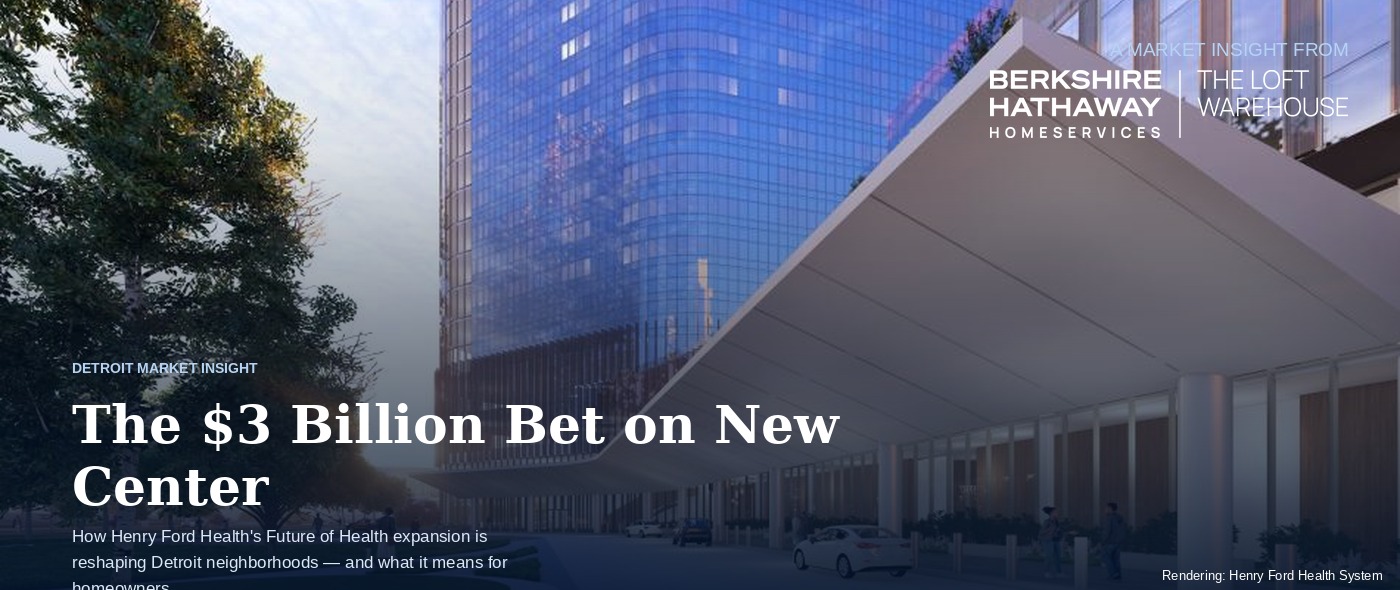
Large-scale medical investment has a way of quietly transforming the neighborhoods around it — not overnight, and not with fanfare, but steadily, the way a rising tide lifts every boat in the harbor. Henry Ford Health's "Future of Health" campus in Detroit's New Center is the kind of anchor project that sets that tide in motion.
The numbers are striking on their own terms: $3 billion in committed capital, a 1.2 million-square-foot hospital expansion, a research partnership with Michigan State University, new residential buildings, retail, public infrastructure, and hundreds of new housing units — all designed to create a walkable live-work district woven into the fabric of an existing urban neighborhood. But the real story isn't the construction activity. It's what happens to the blocks surrounding it.
Hospitals are unusual economic engines. Unlike a corporate campus that can relocate or a retail anchor that can shutter, a major medical institution is essentially permanent. It employs thousands of people across income levels — physicians and researchers, but also technicians, administrators, nurses, and support staff. That stable, diversified employment base creates consistent demand for housing, services, and retail within commuting distance.
The "Future of Health" expansion compounds that effect in several ways. The MSU research partnership adds the gravitational pull of a university — graduate students, postdocs, and researchers who tend to cluster near their work, rent apartments, support local businesses, and eventually purchase homes. New retail and public infrastructure raises the perceived quality of life for the entire surrounding area. And the sheer visibility of $3 billion in active construction signals to private developers that the neighborhood is a credible bet.
Anchor medical institutions have historically acted as economic stabilizers during broader market cycles — attracting new residents, graduate students, researchers, and private-sector investment even when surrounding markets softened.
Buyers increasingly prioritize proximity to major employment centers and healthcare institutions when choosing where to live. The walkability premium — the added value of being able to walk to work, to amenities, to transit — has become one of the most consistent drivers of residential appreciation in urban submarkets. New Center is positioned to offer exactly that.
Detroit is not the first legacy industrial city to watch a major healthcare investment reshape a neighborhood. The playbook has been run before — with outcomes that should encourage anyone currently holding or considering property near the New Center corridor.
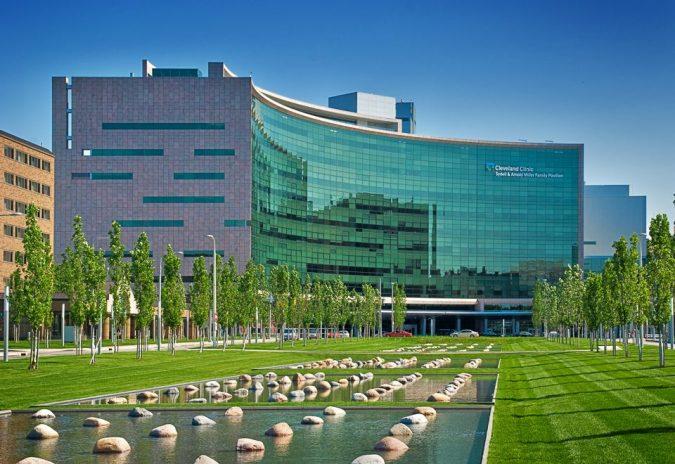
Institutional growth transformed surrounding districts into some of the city's strongest-performing residential submarkets. Fairfax, Little Italy, and University Circle saw sustained reinvestment driven by healthcare employment and anchor prestige.
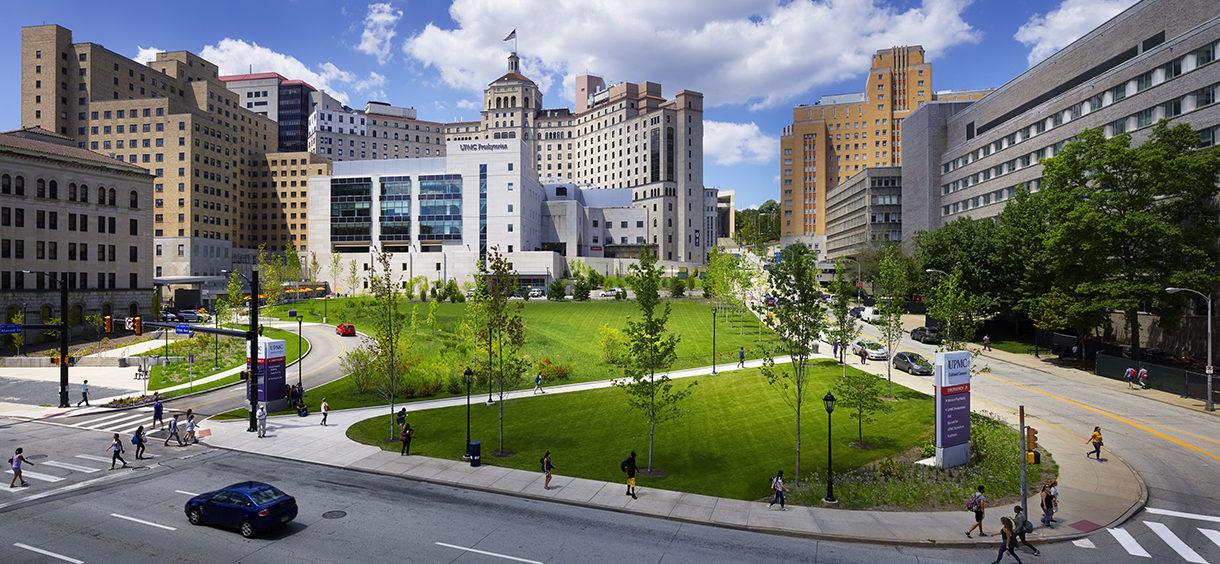
As UPMC expanded, demand surged for apartments, renovated historic homes, and mixed-use development along the healthcare corridor — mirroring patterns visible today in Detroit's New Center.
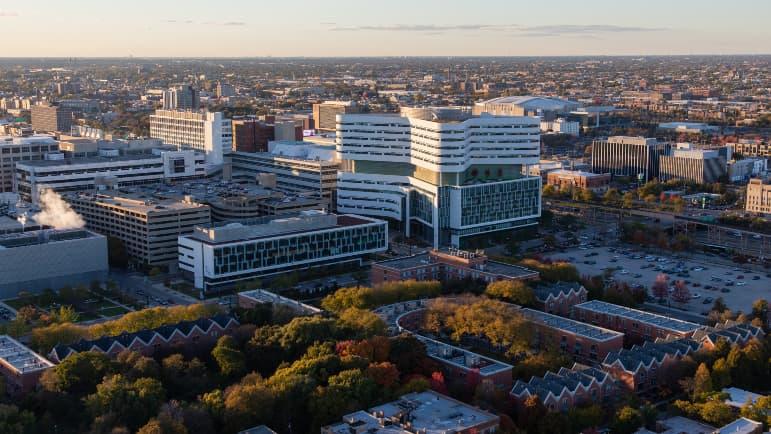
Concentrated healthcare investment stimulated new residential construction, retail activation, and long-term appreciation in neighborhoods once considered secondary urban markets.
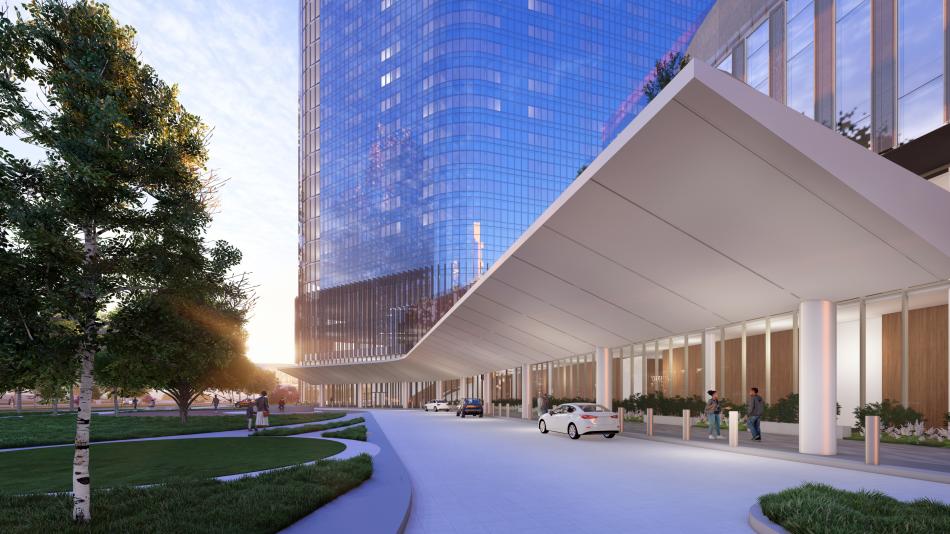
The "Future of Health" campus positions New Center as the next chapter in this Midwestern pattern — combining scale, research partnership, residential density, and walkability investment in one initiative.
In each of these cases, the transformation wasn't instantaneous. It unfolded over years as the employment base grew, infrastructure improved, and private developers responded to the signal that anchor institutions send. Detroit's New Center is now at the beginning of that same arc — which means buyers who move early capture the full run of appreciation, not just the tail end of it.
The ripple effect of the New Center expansion won't be felt equally across the city. The neighborhoods with the strongest proximity and connectivity to the Henry Ford campus are positioned to benefit most directly. For buyers thinking about where to plant a flag, four of those neighborhoods have new construction available right now — which is precisely when the opportunity is most compelling.
New Center itself is the obvious epicenter. It's where the new live-work district is being built, where the employment density is concentrating, and where demand pressure on housing will be felt first and most acutely. For buyers who want the shortest distance between their front door and this transformation, there is a new development available right now:
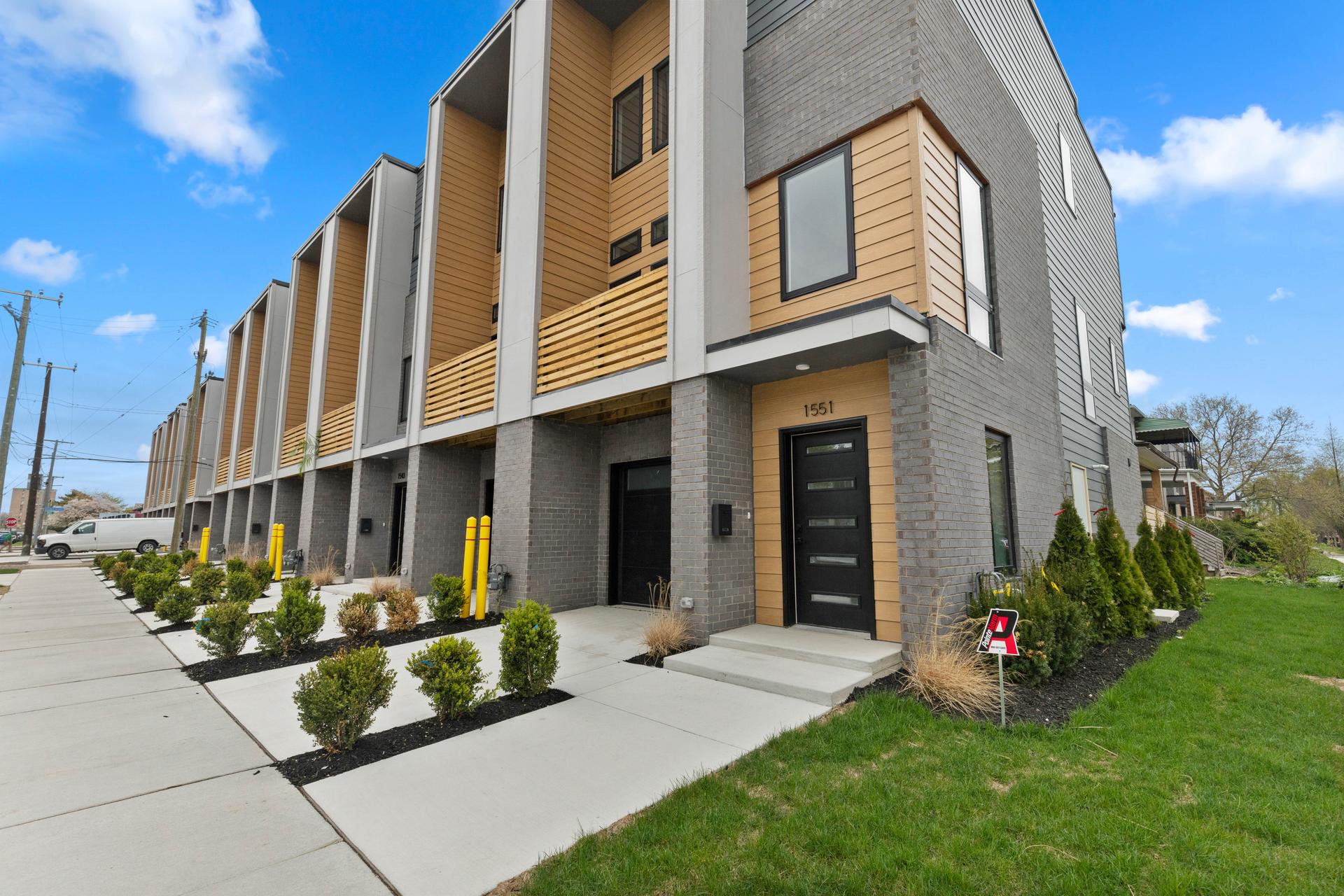
Brand-new condominium townhomes positioned at the heart of the New Center opportunity. Buying pre-construction or directly from the developer means securing today's pricing before the momentum of the Henry Ford Health buildout is fully priced into the market — a meaningful advantage in a neighborhood on the cusp of its breakout moment. Paired with Detroit's NEZ New Construction tax abatement, buyers can lock in both reduced carrying costs and ground-floor appreciation in one of the city's most strategically located submarkets.
Virginia Park and Piety Hill sit just north of the Henry Ford corridor, offering some of Detroit's most intact historic residential fabric at prices that still reflect pre-momentum values. As the Future of Health campus builds out northward and the surrounding employment base deepens, these neighborhoods are well positioned to benefit from both increased demand and infrastructure improvements along the connecting corridors.
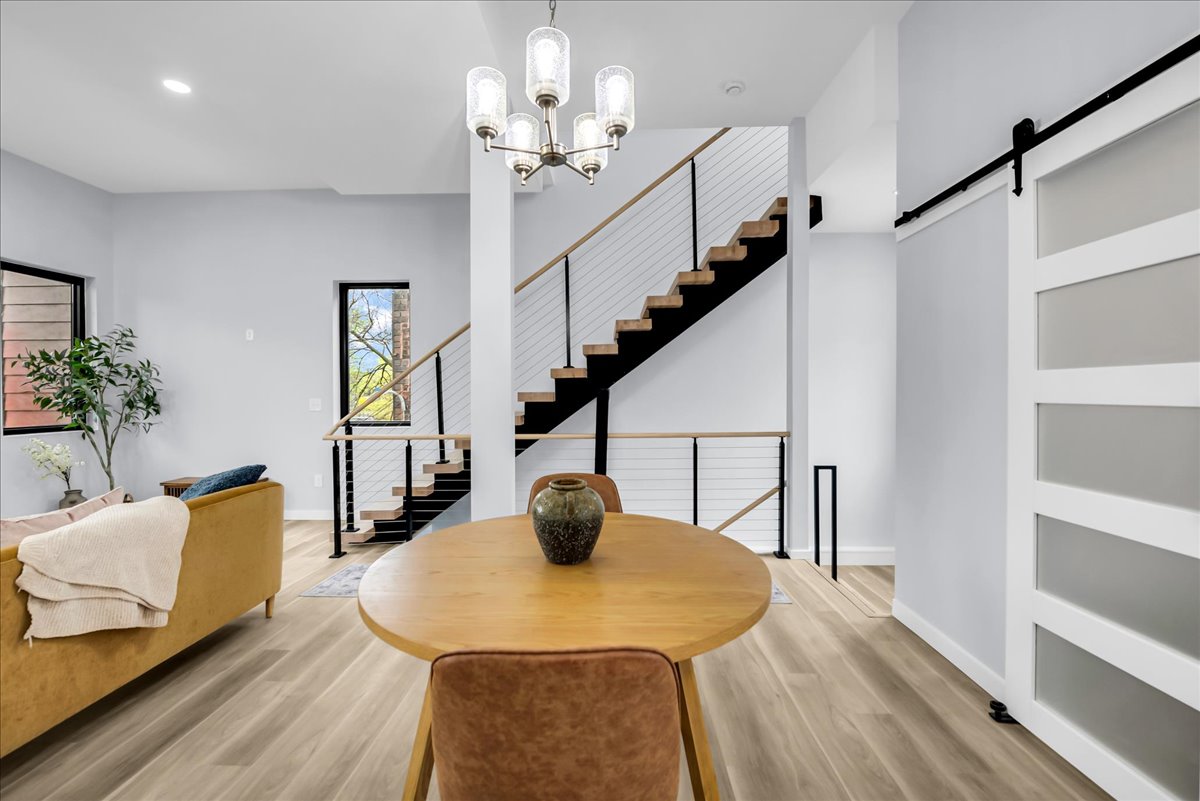
New construction residences in one of Detroit's most quietly undervalued historic neighborhoods, now positioned squarely in the growth path of the New Center investment corridor. The combination of a serene, tree-lined residential setting and direct proximity to the Henry Ford campus employment base makes Piety Hill an exceptional value proposition for buyers seeking lifestyle quality alongside long-term appreciation. Purchasing directly from the developer here means buying before the market has fully priced in what's coming — and the NEZ New Construction tax abatement makes the ownership economics remarkably favorable for primary occupants.
Woodbridge, just south and west of New Center, offers established residential character and historic housing stock at pricing that still reflects pre-momentum values — the kind of gap that closes quickly once the broader narrative takes hold.
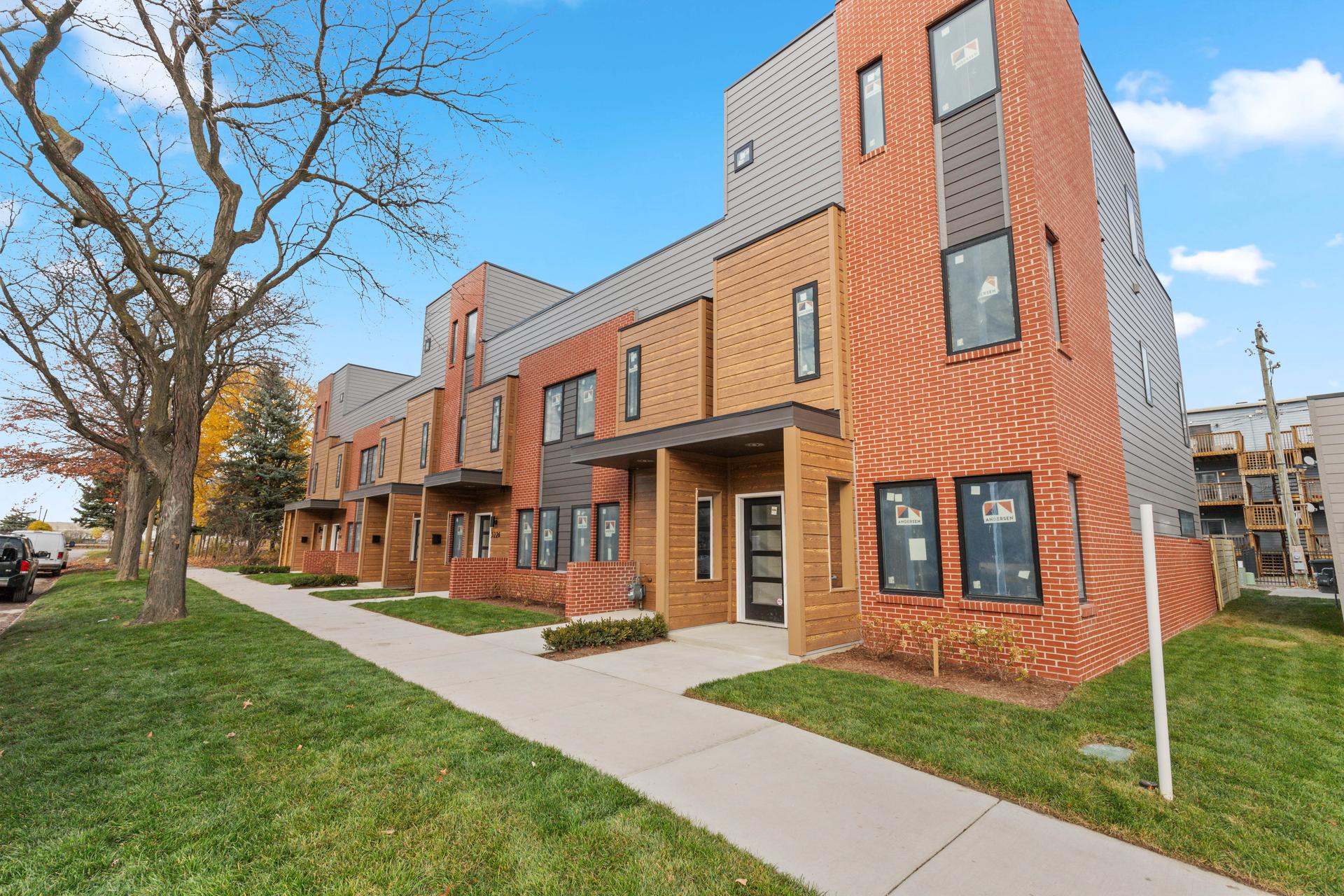
New townhome residences in one of Detroit's most beloved historic neighborhoods, now positioned to benefit directly from the New Center investment corridor to the north. Purchasing directly from the developer means no bidding wars, full warranty protection, and the ability to customize finishes — while the NEZ New Construction tax abatement keeps annual carrying costs dramatically lower than comparably priced resale homes. For buyers who want walkable neighborhood character combined with the financial leverage of new construction, Woodbridge is the story playing out in real time.
Portions of Midtown, already one of Detroit's most recognized recovery stories, will see their positive narrative reinforced and extended northward as the Henry Ford campus expands and the live-work district matures. Midtown has long been Detroit's proof of concept for urban residential demand — and the "Future of Health" initiative is effectively extending that proven corridor.

New construction condominiums in the northern Midtown corridor, capturing both the established energy of Detroit's most active urban neighborhood and the upward pressure being generated by the New Center expansion nearby. Buying new from the developer here means entering at a price point that reflects today's market — before the full weight of the Future of Health investment is absorbed into surrounding residential values. The NEZ New Construction abatement makes the monthly economics of ownership even more favorable, putting new construction within reach for buyers who assumed resale was their only option.
No single project transforms an urban market overnight. What large-scale anchor investments like "Future of Health" do is create the conditions for a positive feedback loop: improved infrastructure attracts new residents, new residents support retail, retail draws developers, developers build housing, housing attracts more residents — and the cycle compounds.
For Detroit, this initiative may mark the moment that New Center completes its transition from a primarily institutional district into one of the city's most important mixed-use residential neighborhoods. The institutional bones were always there. The investment commitment is now confirmed. What followed in Cleveland, Pittsburgh, and Chicago was sustained residential appreciation that outperformed the surrounding market for years.
Homeowners in New Center and the surrounding neighborhoods aren't just holding real estate. They're holding a front-row position in what may be the most consequential neighborhood investment story Detroit has told in a generation. And for buyers who act before that story is fully told — the front row still has seats available.
Whether you're buying into pre-construction, exploring new developments, or selling your current home in Metro Detroit — our team specializes in exactly this market. Let's talk.
sabra@theloftwarehouse.com · Berkshire Hathaway HomeServices The Loft Warehouse

I founded The Loft Warehouse in 2006. Our focus has been and is on the City of Detroit, and the surrounding suburbs, with special emphasis on new development and historic homes. We also have a propert....
Berkshire Hathaway HomeServices — The Loft Warehouse Detroit, Michigan89%of homebuyers say sidewalks and places to walk are important when choosing where to live — NAR, 2026$4K–
Berkshire Hathaway HomeServices — The Loft Warehouse Detroit, Michigan$3BTotal investment in the Future of Health campus1.2MSquare feet of hospital expansion underway5 yrWindow where
Realtor Chronicles 313 – The Skills That Matter Most Right NowThe real estate industry has entered a new era — one where professionalism, communication, negotiation, marketing, and
Complexity & CommissionsWhy Being a Detroit Real Estate Agent Feels Like Running a Small Business, a Media Company, and a Law Firm — All at OnceLet’s be honest for a moment.When you
 IDX provided courtesy of Realcomp II Ltd., via Berkshire Hathaway HomeServices The Loft Warehouse and The Originating MLS(found above), © 2026 Realcomp II Ltd. Shareholders. The information being provided is for consumers personal, non-commercial use and may not be used for any purpose other than to identify prospective properties consumers may be interested in purchasing.
Data is updated as of September 23, 2026 12:49 PM UTC Information deemed reliable but not guaranteed.
The
data relating to real estate on this web site comes in part from the Internet Data Exchange (IDX) Program of Realcomp Ltd. Real estate listings held by firms other than Berkshire Hathaway HomeServices The Loft Warehouse are marked with the Realcomp Internet Data Exchange logo or thumbnail logo and detailed information about them includes the Listing Broker's Firm Name.
The information being provided is for consumers personal, non-commercial use and may not be used for any purpose other than to identify prospective properties consumers may be interested in purchasing.
Show More...
